
Contract Review Checklist: What to Check Before Signing
Key Takeaways
A contract review checklist is a repeatable set of checks run before your organization approves and signs an agreement. It covers the contracting entities, the governing jurisdiction, the internal approval rules, and the obligations that continue after signature. For a group operating across multiple entities and jurisdictions, a single universal checklist is not enough: the framework must be common, but the application must reflect local law, entity-specific delegation rules, and the risk profile of each contract. The right starting point is confirming who is signing, on behalf of which entity, and under which authority before negotiating any substantive term.
In this article
- What is a contract review checklist?
- How to organize a review before signature
- What clauses and terms should the checklist cover?
- Which documents and dates to verify
- How to adjust the review to contract risk
- Final validity and signature checks
- How Alf supports contract review across entities
- Frequently asked questions
What is a contract review checklist?
A contract review checklist is a repeatable set of checks run before your organization approves and signs an agreement. It ties the legal text to the business need, confirms the contracting entities and their authority, identifies the governing jurisdiction, maps the internal approval rules, and surfaces the obligations that will need active management after signature. A checklist does not replace a jurisdiction-specific legal opinion on enforceability. It structures the review so that nothing material is missed and every decision has a named owner.
Consider a common situation. A subsidiary receives a new version of a supplier contract by email. Procurement has approved the price. The business wants a signature the same day. Nobody has confirmed which legal entity is signing, which version is the operative one, or whether the proposed signatory has authority under the group’s delegation rules. A structured checklist answers those questions before any substantive negotiation begins. The issue is not the speed of the business request. It is the absence of a shared framework that makes the right questions automatic.
How to organize a review before signature
A controlled review runs in five stages: collect the full package, triage the risk, review the terms, obtain the required approvals, and verify the execution copy. Each stage needs an owner and a target date assigned before the review starts. When legal receives only the main agreement, the review is already incomplete. The business request, commercial approval, prior agreements, redlines, schedules, supplier information, and the policy that sets approval thresholds are all part of the package.
Build the review record first
The intake request should capture the information that determines which review path applies. For a group operating across multiple entities, this means recording more than the contract value. Each field below has a direct consequence for how the review is structured and who must be involved.
- Contracting entities: the full legal name, jurisdiction of incorporation, registered address, and the entity that will carry the obligation or receive the benefit.
- Business purpose: what is being bought, sold, licensed, or permitted, including the product or service, the territory, and the business owner.
- Commercial value: total expected spend or revenue, currency, payment structure, renewal exposure, variable fees, and approved budget.
- Key dates: the intended effective date, delivery milestones, renewal date, notice periods, and warranty period.
- Access and data: personal data, confidential information, systems, facilities, intellectual property, and third-party data the counterparty may reach.
- Internal signatory: the proposed signer and confirmation that this person has authority under the applicable delegation rules.
Name each owner before the review starts. A role only functions if the person who owns the decision is identified. Depending on the contract, that means a business owner, a legal reviewer, a procurement owner, a security reviewer, a privacy reviewer, and a finance approver. In a group with several subsidiaries, the same contract type may trigger different owners in different entities. The checklist must make that visible, not leave it to individual memory.
Keep review and approval separate
Legal review tests the wording, internal consistency, and enforceability risk. Commercial approval confirms that the organization accepts the price, scope, timing, and tradeoffs. Recording each decision separately, with its own owner, is not a formality. It is the only way to demonstrate, after the fact, that the right person made the right call with the right information. Set escalation rules before the review starts. A low-value deal on standard terms needs a focused check against an approved playbook. A long-term deal with uncapped exposure, sensitive data, unusual intellectual property terms, or real operational dependency needs deeper review and sign-off from the responsible business and control functions. After any material change to the agreement, send it back through review. A revised liability clause, pricing schedule, data use term, or renewal provision can change the risk picture entirely.
For groups managing contract renewal across multiple entities, the same principle applies: each renewal decision needs a named owner, a documented approval, and a clear record of what changed.
Is contract review fragmented across entities in your group? Map one real contract workflow with the Alf team, entity by entity.
Talk to an expertWhat clauses and terms should the checklist cover?
Work through the agreement in a consistent order: identity and scope first, then commercial terms, then risk allocation, then exit and post-termination obligations. Each item should end in a clear result: approved, changed, escalated, or accepted by a named owner. A checklist that produces no documented outcome is not a checklist. It is a reading exercise.
Parties, scope, and commercial terms
Confirm these before negotiating detailed language. A trading name may not identify the entity that will be liable. An affiliate may lack the capacity to receive the service or perform the obligation. These are not technicalities. In a group with multiple subsidiaries, the wrong contracting entity can create a gap between the entity that carries the risk and the entity that holds the assets.
- Legal names: check the exact legal names against reliable corporate records and the signature block.
- Contracting entity: confirm which parent, subsidiary, branch, or affiliate is signing, and whether that entity can receive the service or perform the obligation.
- Authority: confirm that each proposed signatory has authority under applicable law and internal delegation rules.
- Business scope: compare the stated services, goods, territory, users, and permitted purposes against the approved business request.
- Deliverables: define what each party provides, in what format, where, and by which milestone.
- Acceptance: specify objective criteria, review periods, correction rights, and what happens on silence or rejection.
- Price: reconcile the contract price with the approved commercial terms, including taxes, expenses, minimum commitments, usage charges, and price increases.
- Payment: check invoice triggers, payment dates, currency, the procedure for disputed invoices, late payment consequences, and set-off rights.
- Variable costs: identify travel, implementation, overage, storage, support, change requests, and reimbursable expenses.
Risk allocation and exit
Review the risk allocation clause by clause. The goal is not to eliminate risk. It is to confirm that the risk the organization is accepting is visible, deliberate, and approved by the right person. Uncapped liability, broad indemnities, and narrow carve-outs are not automatically unacceptable. They are escalation triggers.
- Liability cap: the amount, the measurement period, the aggregation rule, and which claims fall under it.
- Excluded losses: consequential, indirect, special, punitive, lost profit, and data loss exclusions. Test whether the exclusions leave a gap you cannot accept.
- Carve-outs: whether confidentiality, data protection, intellectual property infringement, fraud, willful misconduct, bodily injury, or payment obligations are treated differently.
- Indemnity: the protected party, the covered claims, the notice duty, who controls the defense, settlement consent, and the payment obligation.
- Warranties: the promised standard, the warranty period, the exclusions, the correction process, and replacement rights.
- Termination: termination for convenience, for breach, on insolvency, on change of control, after prolonged force majeure, and on regulatory or security events where relevant.
- Post-termination duties: unpaid amounts, transition support, data return or deletion, license survival, confidentiality, audit rights, and continuing restrictions.
A renewal clause needs more than an “automatically renews” label. Record the renewal period, the notice period, the required notice method and recipient, how prices can change, and who decides whether the agreement continues. In a group where subsidiaries manage their own supplier relationships, renewal decisions made without group visibility create exposure that accumulates quietly.
Data, intellectual property, and disputes
Define what confidentiality covers and how long the duty lasts. Check permitted disclosures, required safeguards, and the procedure for compelled disclosure. For intellectual property, separate pre-existing materials, newly created work product, improvements and feedback, and tools or third-party materials. State who owns each category and what rights the other party receives, for what purpose, territory, term, and users.
For data, connect the legal terms to the real data flow and the systems the supplier will access. Record data categories, processing purpose, locations, and subcontractors. Check the retention period, access rights, return or deletion duties, security commitments, and the incident notice process. Where the agreement involves personal data and the counterparty acts as a processor, the contract must be in writing under Article 28 of the GDPR (Regulation (EU) 2016/679). For financial entities in the EU, agreements covering information and communication technology services must also meet the contractual requirements of DORA (Regulation (EU) 2022/2554), applicable since January 17, 2025. Check governing law, forum, dispute escalation, arbitration, language, notice method, and available remedies. The dispute clause decides where a dispute proceeds, who receives notices, and which internal records you must keep.
Group framework, local application
A contract review checklist for a group operating across multiple jurisdictions cannot be a single universal document. The framework should be common: the same categories, the same escalation logic, the same approval thresholds. The application must reflect local law, entity-specific delegation rules, and the regulatory environment of each jurisdiction. A checklist that ignores this distinction will either be too rigid to apply locally or too loose to provide meaningful group-level control.
The practical consequence is that the checklist must be paired with a clear record of which entity is contracting, which law governs, and which local rules apply. That record is not a legal opinion. It is the organizational context that makes the review defensible when a regulator, a counterparty, or group leadership asks how the decision was made.
Which documents and dates to verify
Verify the complete package before relying on any clause. Keep the executed agreement with its amendments, exhibits, approvals, and signature evidence. Make sure schedules, statements of work, order forms, and incorporated documents are available to reviewers. Online terms need particular care. Record the URL, the access date, and the version or publication date. Note the incorporation language and how changes are made. If a policy can change without notice, identify who monitors it and confirm whether you can reject or terminate after a material update.
For a renewal or amendment, compare the new document with the prior executed agreement. List what stays unchanged and what is replaced. Look for any earlier obligation the amendment might leave in place by accident. Keep one dates register for the agreement: the effective date and its trigger, performance and acceptance milestones, and notice dates with the required method, recipient, address, and time period. Commercial promises made in meetings or sales calls should either appear in the contract or be expressly excluded. If the business depends on a representation, a service level, a technical feature, or an implementation commitment, find it in an enforceable document before approving.
How to adjust the review to contract risk?
Triage should weigh more than contract value. Review depth rises with the duration and operational dependency of the commitment, the sensitivity of the data and the systems the supplier can reach, the geographic reach and supplier concentration, and the difficulty of exit. A standard agreement with limited access and a short term may need only a focused review against an approved playbook. A strategic supplier agreement needs a deeper review covering liability, security, intellectual property, business continuity, subcontracting, and termination assistance.
The risk-based approach only works if the triage criteria are explicit and shared. When each subsidiary applies its own judgment about what constitutes a high-risk contract, the group has no consistent picture of its exposure. The checklist must include a triage step with defined thresholds, not leave the depth of review to individual discretion. This is one of the structural problems that legal operations is designed to solve: replacing implicit judgment with explicit, repeatable rules.
Final validity and signature checks
Before signature, compare the final file with the last version approved by legal and by the business. Check every redline, comment, schedule, order form, incorporated policy, and signature block. Check any material change made after approval. Confirm that the parties match the approved entities and that each signatory has authority. Record every required approval. Make sure the signer receives the complete execution package, and keep the final file accessible and reproducible.
The signature method should match the transaction and the records you must keep. Store the executed agreement and the signature evidence, the relevant consent records and incorporated documents, the approval history, and the identity of the final signers where the people who administer the agreement can reach them. Signature closes the negotiation. It does not close the work. Assign owners for deliverables, invoices, renewals, notices, service reviews, data deletion, audit rights, and every other continuing obligation. A contract without named post-signature owners is a liability waiting to surface.
How Alf supports contract review across entities
Alf is the operating infrastructure for global legal departments: it connects people, processes, knowledge and AI agents in one governed system. For contract review, that means the checklist does not live in a shared drive or a personal inbox. It becomes part of the workflow itself.
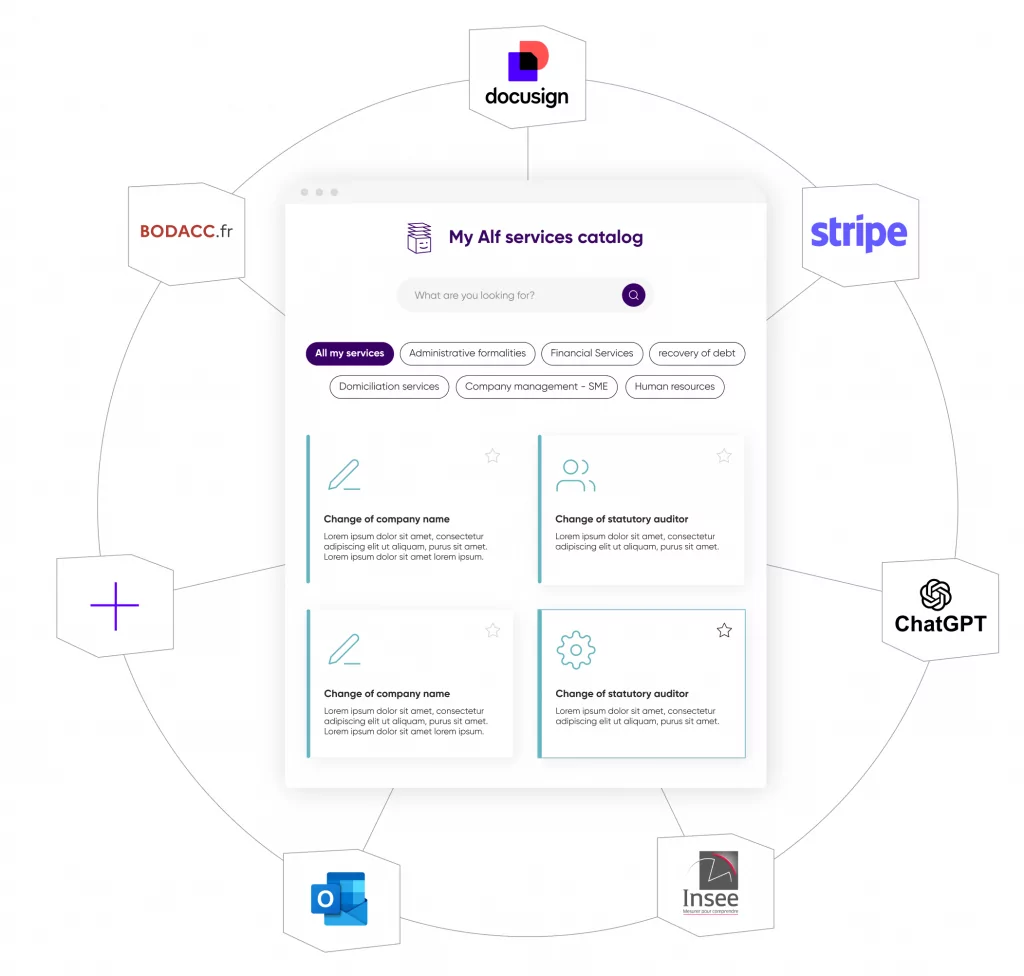
Alf is designed to make the organizational context of each contract explicit and shared. When a request comes in, a configurable intake form captures the contracting entity, the business purpose, the proposed signatory, and the data and systems involved. That information determines which review path applies, which approvals are required, and which local rules are relevant. The workflow routes the matter to the right reviewers, records each decision with its owner, and keeps the full chronological history of the dossier accessible to everyone with the right permissions. Configurable approval circuits reflect the group’s delegation rules, including entity-specific thresholds and escalation paths, without requiring a separate process for each subsidiary.
The AI agent in Alf operates within that same organizational context. It knows which entity is contracting, which policies apply, and at what point a human must take over. Validations and decisions are logged, which makes it possible to respond when a regulator, a client, or leadership asks how a contract was reviewed and approved. Alf is built to scale legal operations without scaling complexity. The more entities and jurisdictions a group operates across, the more a shared operating model matters. A collection of checklists in different formats, owned by different people, stored in different places, is not an operating model.
How many contracts in your group have a named post-signature owner? Bring one contract and walk through it with the Alf team.
Book a demoFrequently asked questions
What is the difference between a contract review checklist and a contract playbook?
A contract review checklist is a set of checks run on a specific agreement before signature. It covers the parties, the terms, the approvals, and the documents. A contract playbook is a standing reference that defines the group’s position on key clauses: what is acceptable, what requires escalation, and what is never acceptable. The playbook informs the checklist. The checklist applies the playbook to a specific transaction.
In a group operating across multiple entities, both are necessary. The playbook sets the group standard. The checklist ensures that standard is applied consistently, entity by entity, with the local adjustments that governing law and entity-specific delegation rules require.
Does the same contract review checklist apply in every jurisdiction?
The framework should be common across the group: the same categories, the same escalation logic, the same approval thresholds. The application must reflect local law, entity-specific rules, and the regulatory environment of each jurisdiction. A clause that is standard in one country may require specific wording or additional disclosure in another. Governing law, forum, and data protection requirements vary significantly across jurisdictions.
The practical consequence is that the checklist must always record which entity is contracting and which law governs. That record is not a substitute for local legal advice on enforceability. It is the organizational context that makes the review traceable and the decision defensible.
At what point in the contracting process should the checklist be used?
The checklist should be applied before substantive negotiation begins, not after the business has committed to a counterparty or a timeline. The first checks, confirming the contracting entity, the signatory’s authority, and the version of the document, must happen before any term is discussed. Applying the checklist after negotiation is complete means accepting terms that may have been structured around assumptions the checklist would have corrected.
For amendments and renewals, the checklist applies again. A renewal is not a continuation of the same decision. It is a new decision about whether the agreement, as it stands, still reflects the group’s acceptable risk. An amendment that changes a liability clause, a pricing schedule, or a data use term changes the risk picture and requires a fresh review of the affected provisions.
Who should own the contract review checklist in a group legal department?
The checklist framework is typically owned by the group legal function, often through the legal operations or contract management function. Local legal teams apply it to their entity’s contracts, with the adjustments that local law and entity-specific rules require. The group owner is responsible for keeping the framework current, training local teams, and consolidating the lessons from exceptions and escalations.
The risk of distributed ownership without a group framework is that each subsidiary develops its own version of the checklist, with different thresholds, different escalation rules, and different levels of rigor. The group then has no consistent picture of its contractual exposure. Ownership at the group level does not mean centralized review of every contract. It means a shared standard that local teams can apply with confidence.
How does Alf support a contract review checklist across multiple entities?
Alf is designed to make the organizational context of each contract explicit and shared. Configurable intake forms capture the contracting entity, the proposed signatory, the business purpose, and the relevant data and systems. That information determines which review path applies and which approvals are required. Approval circuits reflect the group’s delegation rules, including entity-specific thresholds and escalation paths. The full chronological history of each dossier is accessible to everyone with the right permissions.
The AI agent in Alf operates within that same context. It knows which entity is contracting, which policies apply, and at what point a human must take over. Validations and decisions are logged, which makes it possible to respond when a regulator, a client, or leadership asks how a contract was reviewed and approved. Features include configurable workflows and forms, approval circuits, a shared calendar with deadline alerts, document generation from Alf templates, electronic signature, and role-based access rights.